
Established in 1974, the Wisconsin Home Improvement Trade Practices Code sets the laws that govern home improvement transactions and contracts as well as the guidelines for remedying contractor disputes and improprieties.
The code outlines specific details and components that are required to be in a construction contract in order for the contract to be considered valid — to protect the homeowner and provide a firm legal basis for reclaiming any damages if the agreed-upon contract is not followed.
By signing a contract that does not meet the code, contract requirements, or proper disclosures, homeowners are unknowingly and voluntarily giving up their rights.
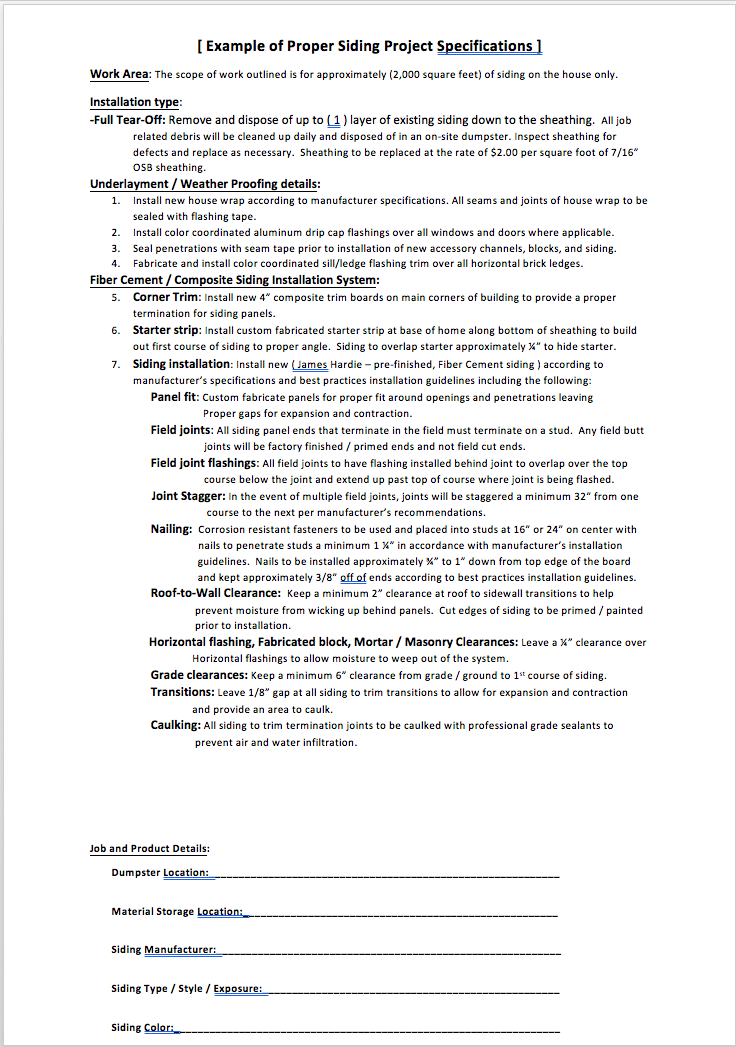
The most important thing to know about this Code and how to use it to protect yourself is that the details in your construction contract are critical. The more detailed the specifications are on the contract regarding your project, the better protected you are.
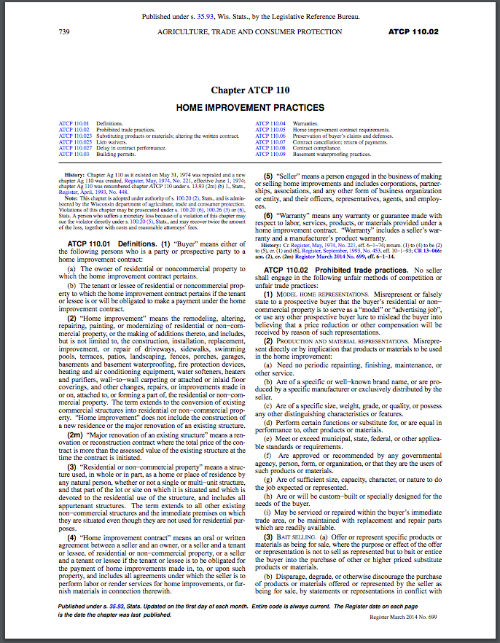
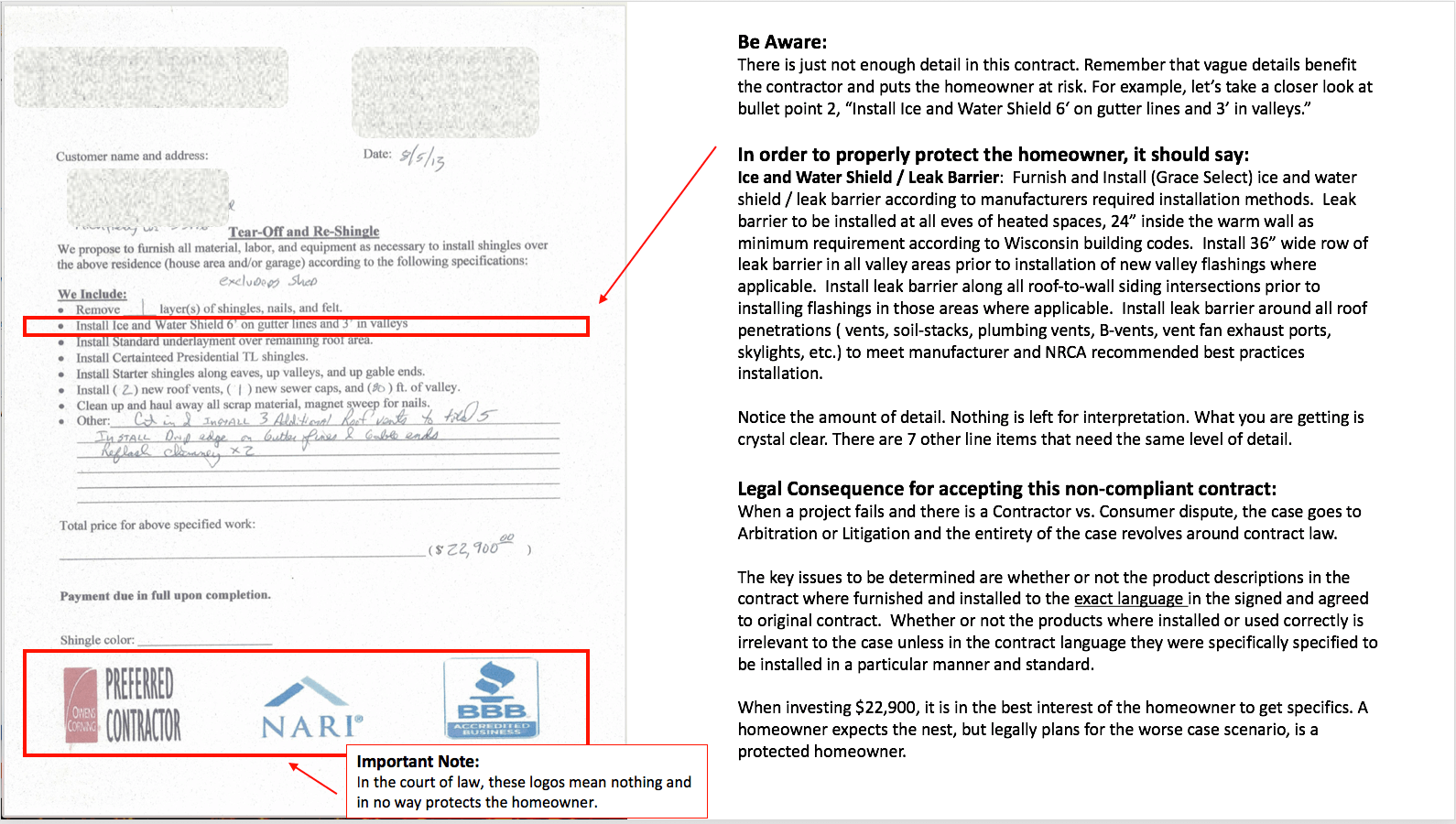
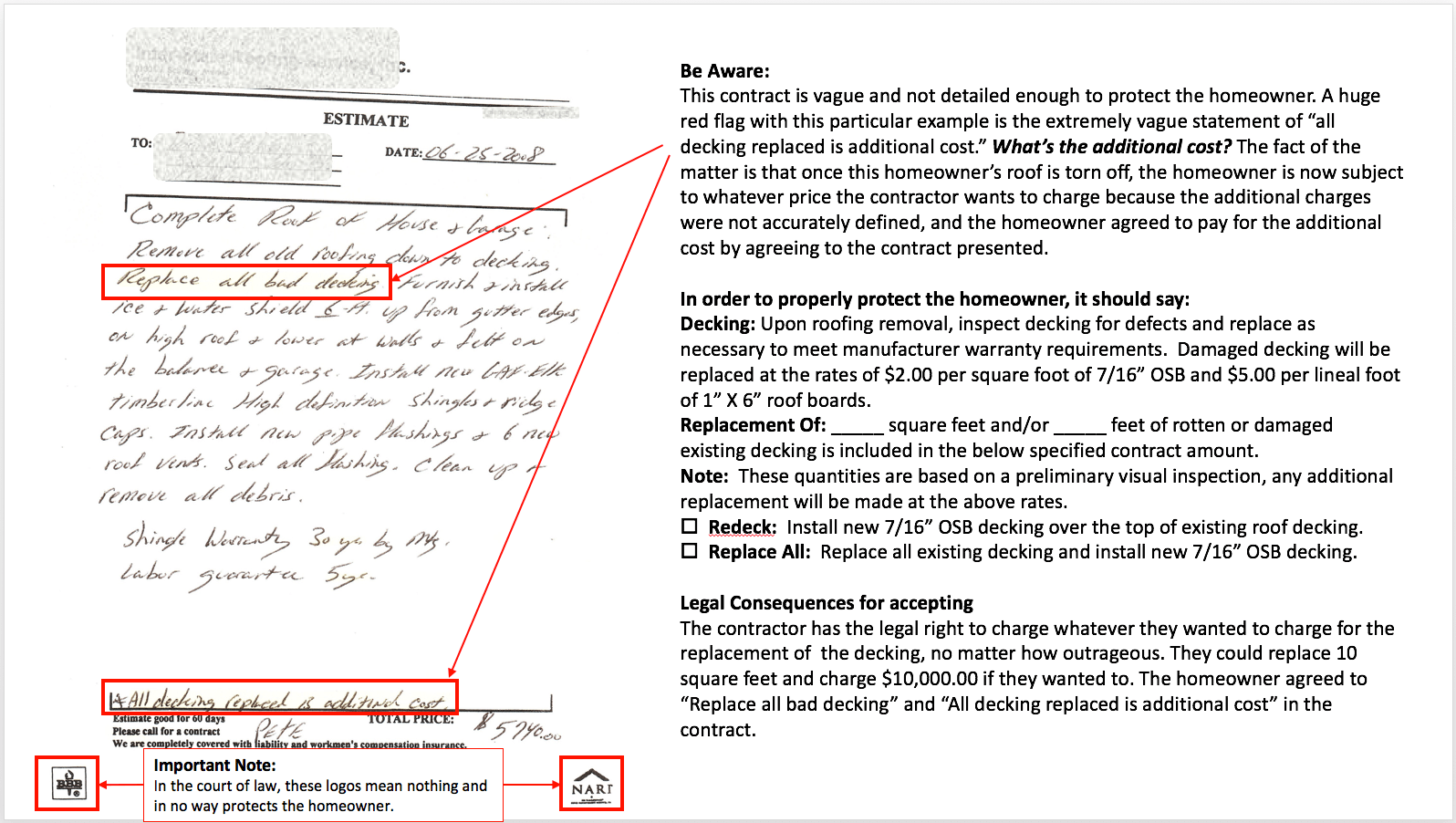

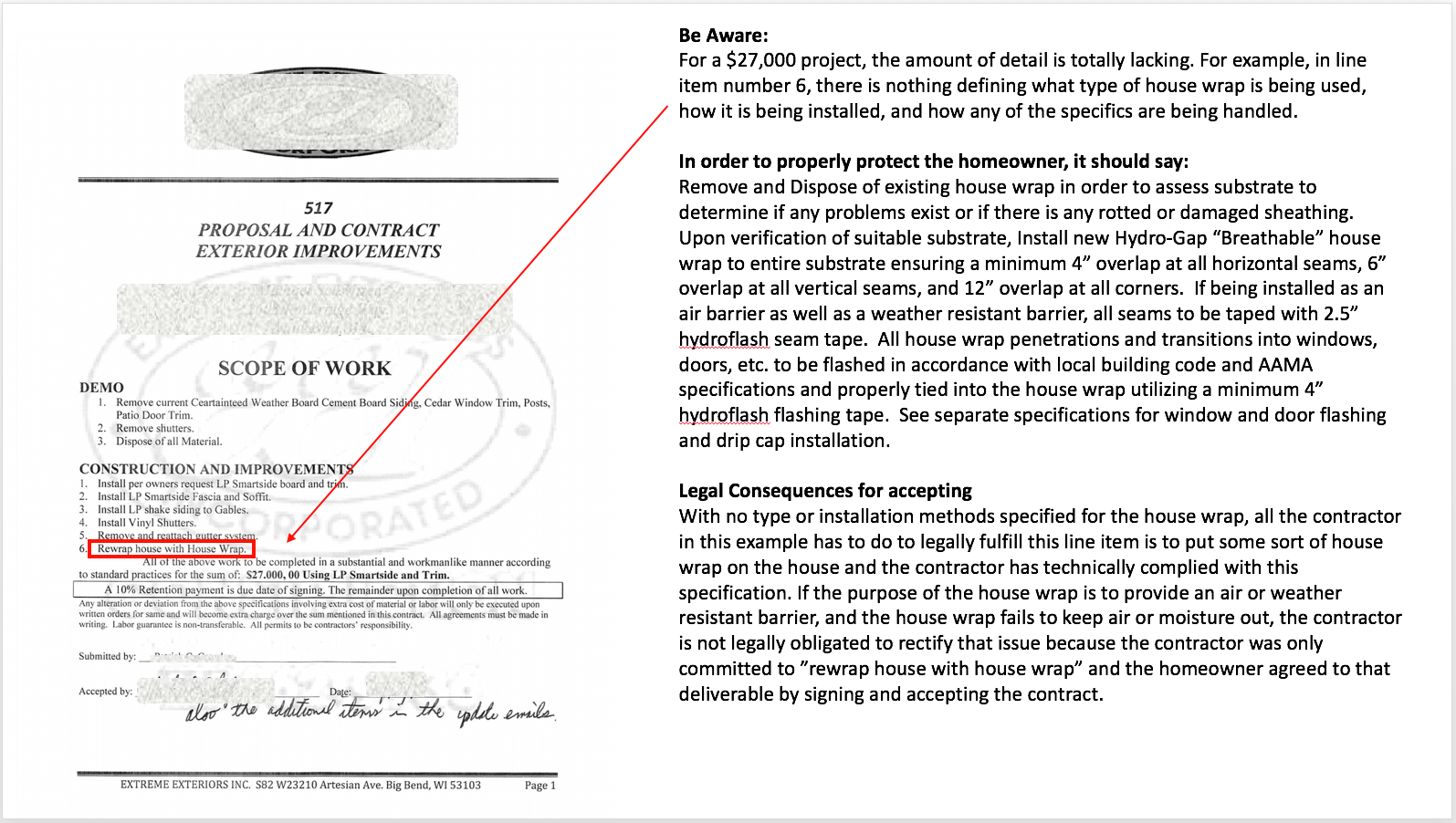
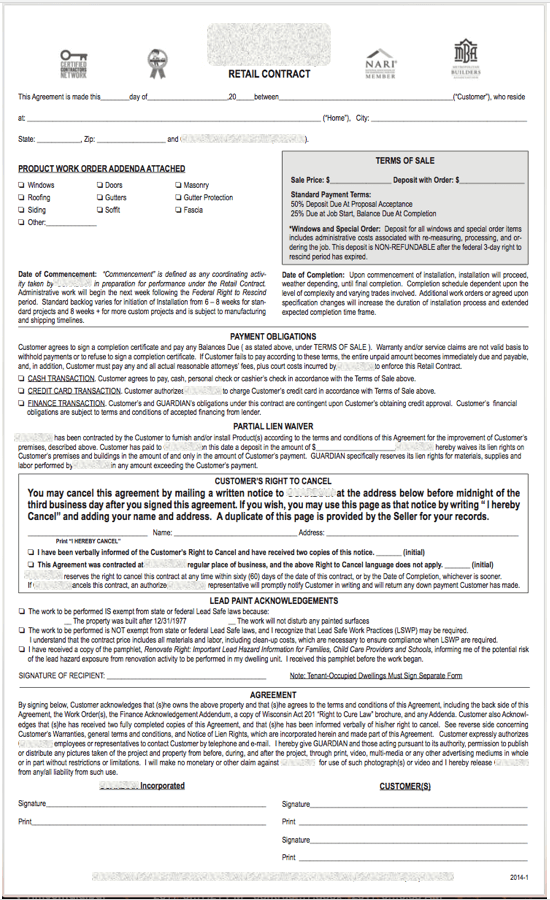
Most construction contracts openly violate the provisions and disclosures in the statutes in order to shift the liabilities off the contractor and onto the homeowner. Contractors know that there is no enforcement of compliance.
Not complying with ATCP-110 is extremely beneficial for contractors because it allows the contractor to remain very vague with what they are contractually doing, and pushes much of the legal and financial risk burdens of performing home improvement work onto the homeowner.
Signing a contract that does not comply with the ATCP-110 requirements can result in a homeowner voluntarily giving up their consumer protection rights and severely limiting their legal options if the project goes wrong.
Make sure that the contract you sign contains specifications for your project that are detailed and exact. Eliminate all vague language. See more examples of correct and incorrect contracts above.
If the dollar figures involved with the project are significant, it would be in your best interest to have a construction lawyer look over the contract.
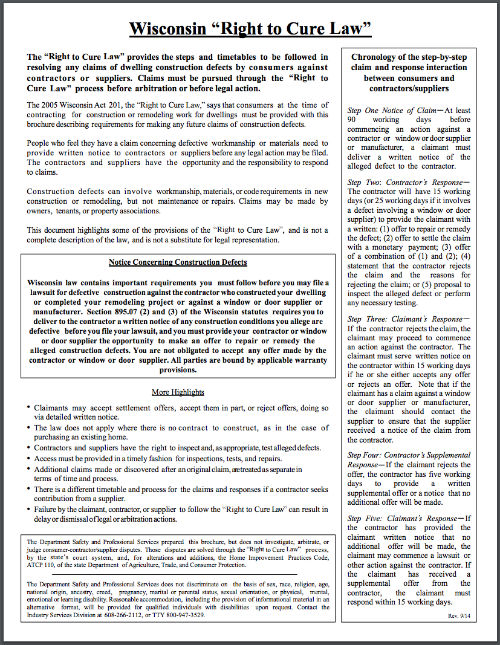
Prior to 2005, because of the incredibly high dissatisfaction level of consumers with their home improvement projects, there were thousands of cases taken to court over disputes. The “Right to Cure” law is a State of Wisconsin mandated dispute resolution process that must be followed before any litigation can occur.
What homeowners need to know is that this document outlines the specific steps that need to be followed by BOTH consumers and contractors in the event of a dispute. Failure by the homeowner [claimant], contractor, or supplier to follow the process can result in delay or dismissal of legal or arbitration actions.
If you are not presented with the Right to Cure Law brochure with your contract, that should be a major red flag because that particular contractor is in violation of 2005 Wisconsin Act 201, the “Right to Cure Law.”
Contractors know that most homeowners are unaware that the “Right to Cure” law exists. They also know there is no policing of whether they hand out the brochure or follow the process. Even though the contractor may be 100% wrong, did terrible work, did not fulfill the contract, or just flat out lied — these cases are often thrown out of court without being heard because the contractor can claim the homeowner did not follow the “Right to Cure” process.
2005 Wisconsin Act 201, the “Right to Cure Law,” says consumers at the time of contracting for construction or remodeling work for dwellings must be provided with this brochure describing requirements for making any future claims of construction defects. If you don’t receive it, your legal options are limited.
Make sure the contractor provides you with the Right to Cure brochure at the time of contracting. Read the steps outlined in the brochure so you understand the dispute resolution process before you sign.
If the dollar figures involved with the project are significant, it would be in your best interest to have a construction lawyer look over the contract.