ATCP-110 · WISCONSIN HOME IMPROVEMENT CODE

The 3 Most Important Things You Need to Know to Legally Protect Yourself

Why you never hear about them — and the consequences of ignoring them.

Wisconsin Home Improvement Trade Practices Code (ATCP-110)

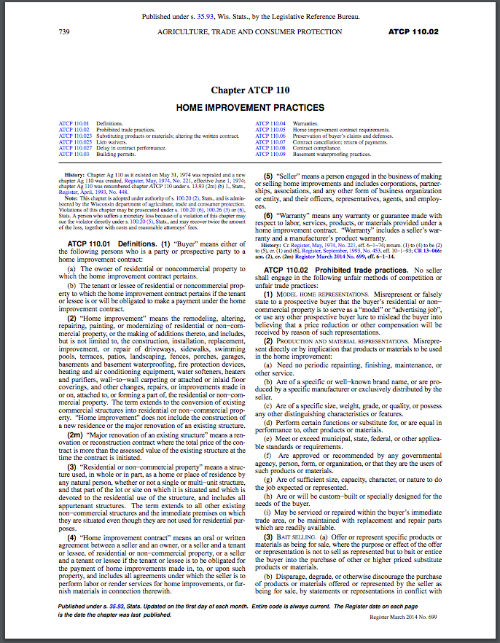
Established in 1974, the Wisconsin Home Improvement Trade Practices Code sets the laws governing home-improvement transactions and contracts — and provides guidelines for remedying contractor disputes and improprieties.

The code outlines specific details and components that are required to be in a construction contract for the contract to be considered valid, to protect the homeowner, and to provide a firm legal basis for reclaiming damages if the agreed-upon contract is not fulfilled.

By signing a contract that does not meet the code’s contract requirements or proper disclosures, homeowners unknowingly — and voluntarily — give up their rights.

The Detail in Your Contract Is Everything

The most important thing to know about ATCP-110 is that the details in your construction contract are critical. The more detailed the specifications on the contract regarding your project, the better protected you will be — in case something happens and you need to pursue legal action.

Contracts to AVOID

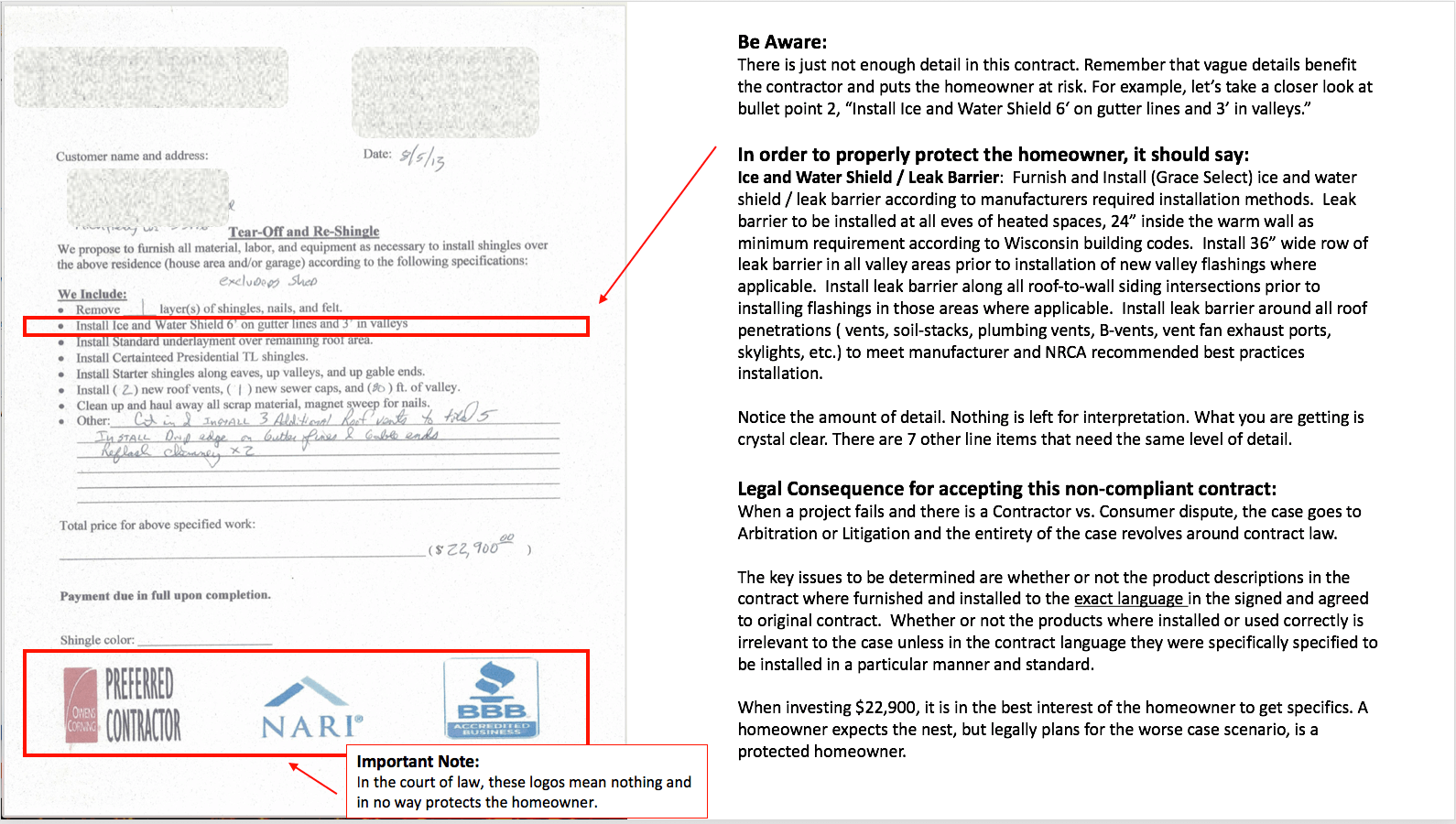
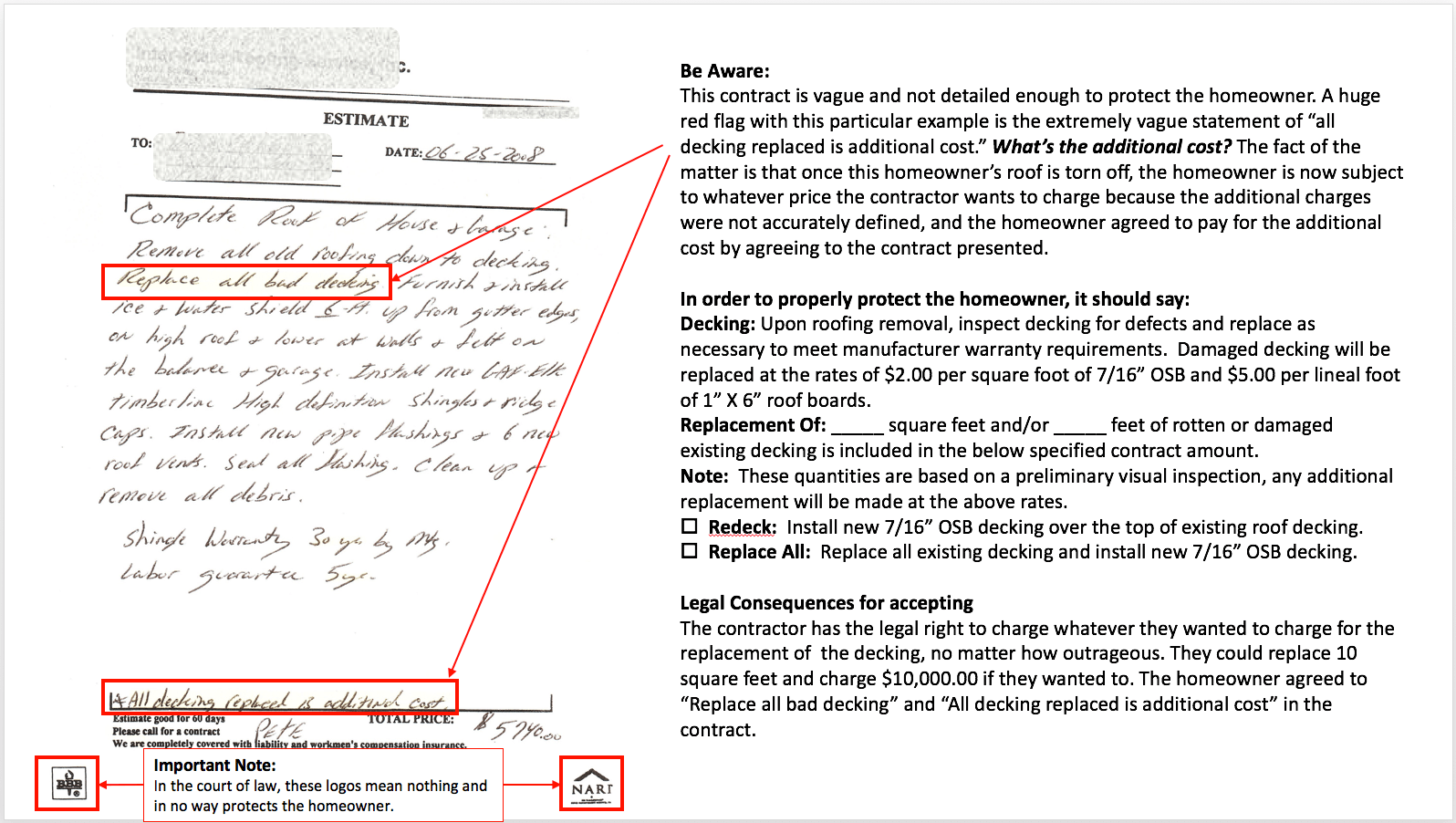
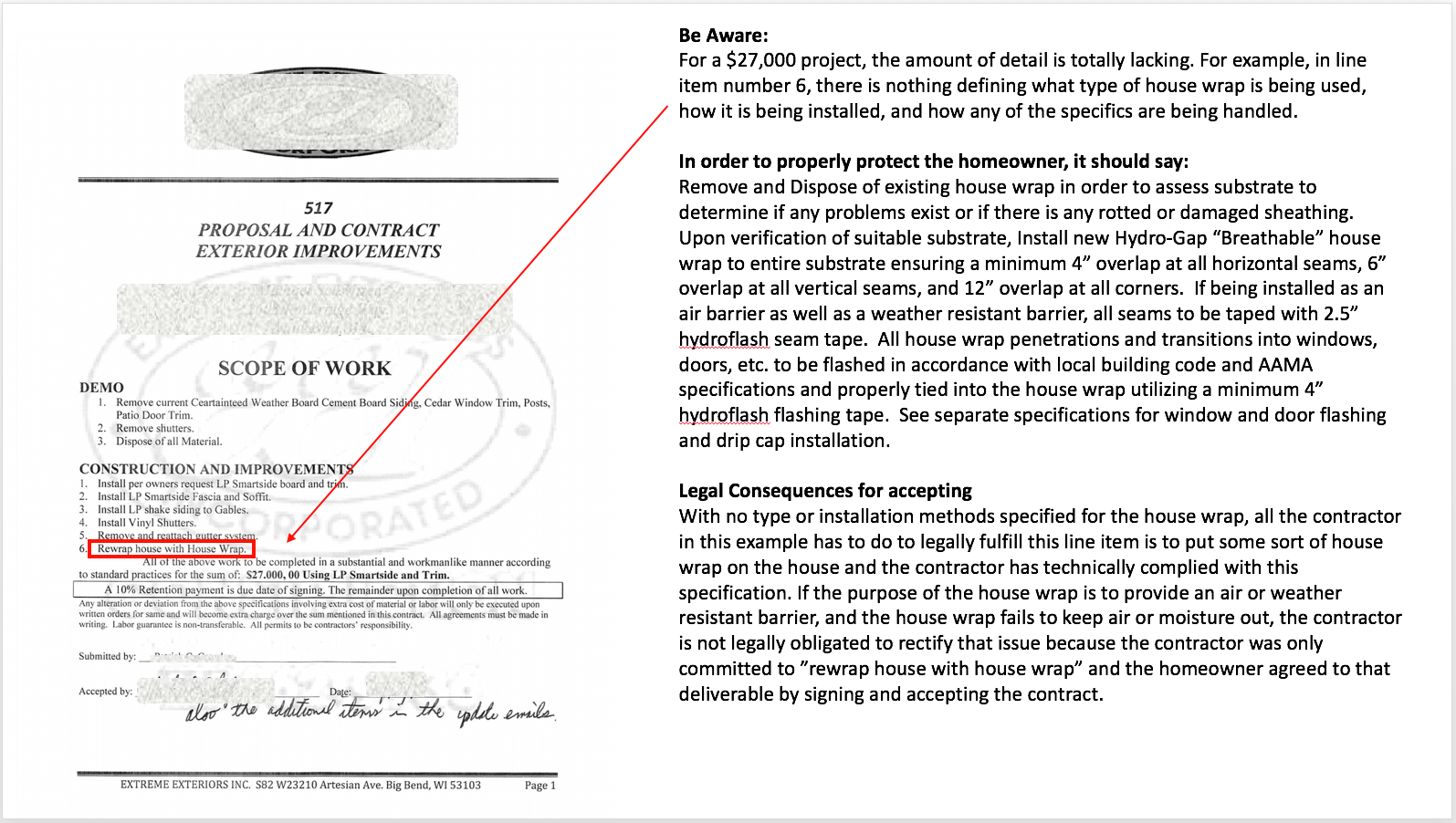
Real examples of vague, non-compliant contracts that strip homeowner rights. Click any image to enlarge.

Bad example 1 — vague language, missing specs, contractor-friendly terms.

Bad example 2 — vague language, missing specs, contractor-friendly terms.

Bad example 3 — vague language, missing specs, contractor-friendly terms.

Bad example 4 — vague language, missing specs, contractor-friendly terms.

ATCP-110 Compliant Examples

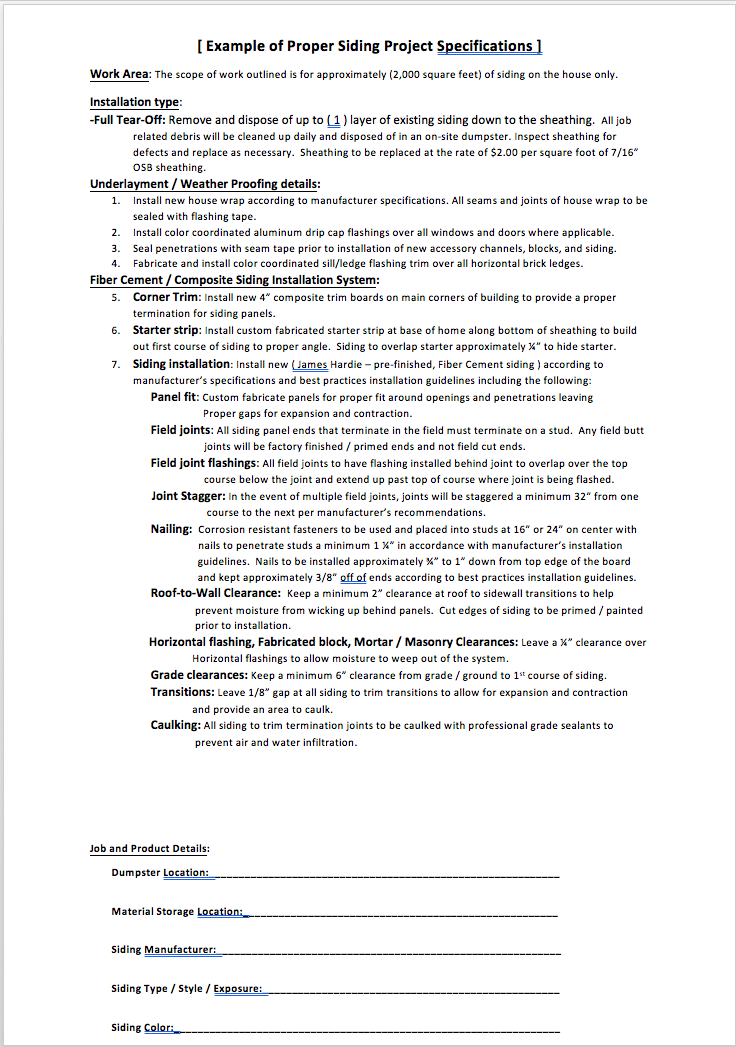
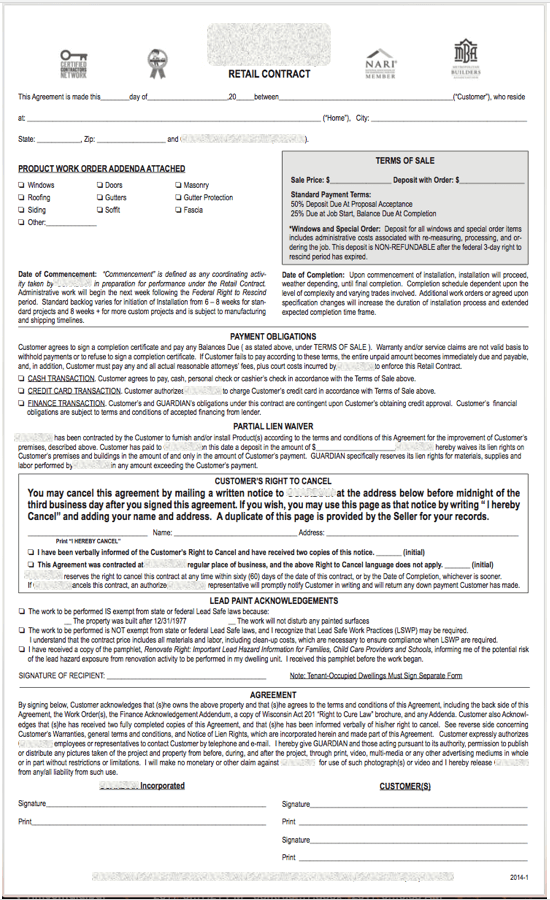
Here are examples of COMPLIANT contract pages — specifications and legal language that actually protect the homeowner.

Compliant Project Specifications

Compliant Terms & Conditions

Why Most Contractors Don't Follow ATCP-110

Don’t make the mistake of assuming the contract you are signing has been written to protect your interest. Exact and detailed information protects you; vague and unspecific language benefits the contractor.

Most construction contracts openly violate the provisions and disclosures in the statutes — to shift the liabilities off of the contractor and onto the homeowner.

Contractors know there is no enforcement of ATCP-110, and that it is up to the consumer to determine what they will or will not accept from a contractor agreement. Because these contractors know that most homeowners are unaware of what to look for, they get away with contracts that have homeowners giving up their rights.

Not complying with ATCP-110 is extremely beneficial for contractors because it allows them to remain very vague about what they are contractually doing, pushing much of the legal and financial risk burden of performing home improvements off the contractor and onto the consumer. Signing a contract that does not comply with ATCP-110 can result in a homeowner voluntarily giving up their consumer-protection rights and severely limiting their legal options.

This can leave homeowners with an incomplete job, a faulty installation, a completed project that did not fix the problem, or even worse damages than before the work was done. Because they signed a contract that didn’t comply with ATCP-110, they have very minimal chance of getting any of their money back or any work redone.

Make sure the contract you sign contains specifications for your project that are detailed and exact. Eliminate all vague language.

If the dollar figures involved with the project are significant, it would be in your best interest to have a construction lawyer look over the contract before you sign.

Don't Sign a Contract That Strips Your Rights

Guardian writes ATCP-110-compliant contracts on every project — detailed specs, clear language, and the disclosures the law requires. Schedule a free consultation and we’ll walk you through what to look for in any contract before you sign.

Ready to Fix It Right the First Time?

Most homeowners overpay because they don’t get the right diagnosis first. Let us change that.